
And I have no intention of stopping.
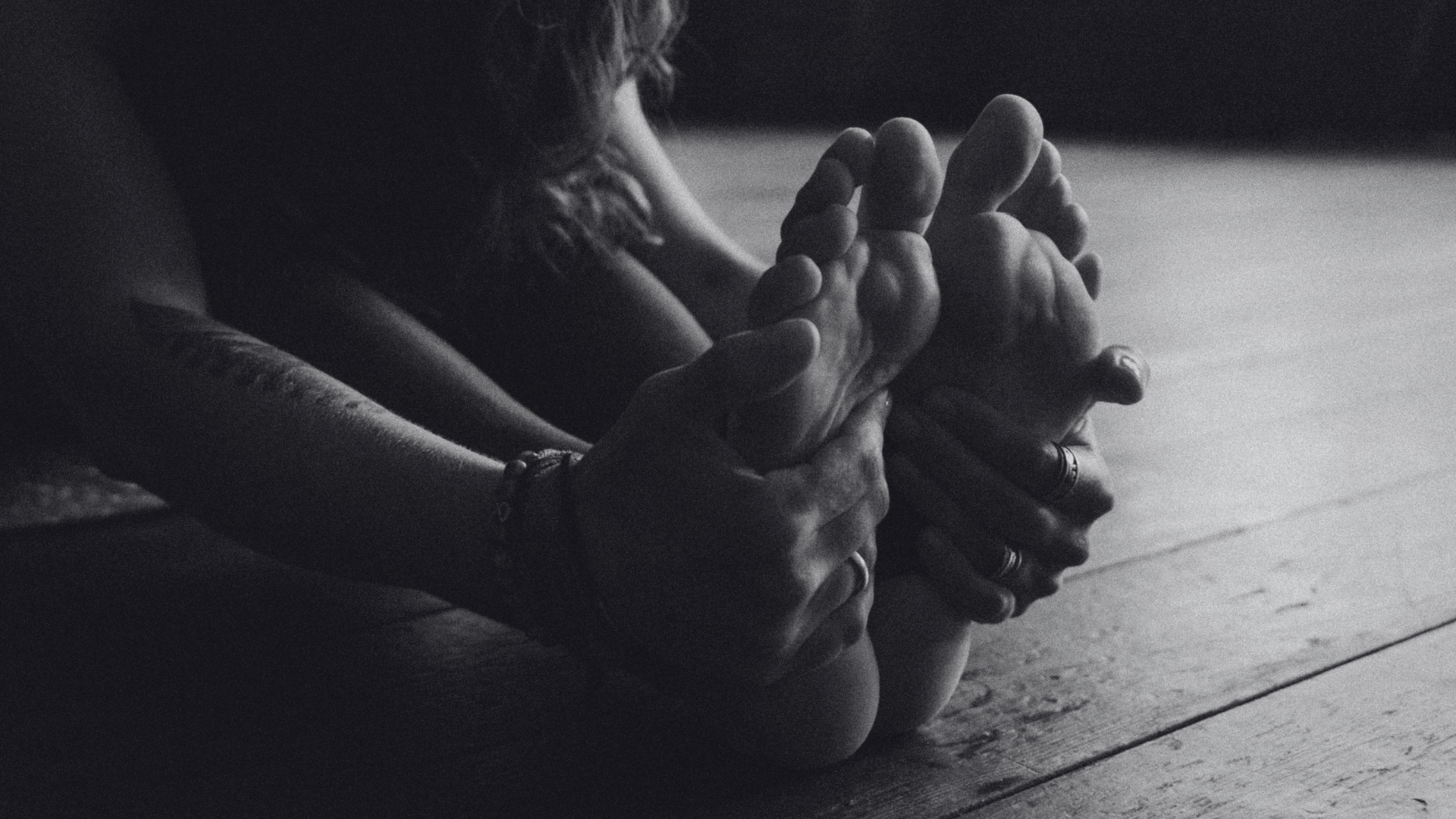
(Photo: Klara Kulikova | Unsplash)
Published August 23, 2026 06:26AM
I tend to process my feelings out loud but feel them alone.
By that I mean I tell people just about everything. I talk ad nauseum, frequently overshare, and turn quick coffees, texts, and walks into a collaborative processing of whatever’s happening in my life.
But it’s rare that I let myself completely fall apart in the company of others. That requires especially difficult circumstances and those who feel safe to me. Even then, a few tears might escape, but I quickly hide behind self-deprecation or a change of subject. Then I let myself fall apart behind closed doors—the messy type of feeling that mars my face for hours and only seems to stop with dehydration, sleep, or a concerned nudge from my cat.
I take pride in my resilience. It was instilled in me at a young age and, in most circumstances, I consider it my superpower. But in some, it’s my kryptonite.
But I do let myself cry in yoga.
Yoga asks nothing of me but to practice and stay present. So I move, tune out the noise of the outside world for an hour, and allow myself to tap into the parts of me that have been pushed aside by the chaos of life. My emotions are given permission to surface—an inner-world experience on display to strangers via a mat. Yet I don’t have to manage anyone else’s reactions to my feelings. We’re all so focused on our own stuff, there’s little attention left to judge each other. So my private exploration is given priority.
As a result, I frequently find myself leaking during Savasana, mere inches from other people yet shrouded in horizontally-vantaged anonymity and protection. Yoga doesn’t care if I cry.
I get to just be and practice through whatever is at the forefront.
The good news for all my fellow mat-criers is that yoga doesn’t discriminate based on the type or magnitude of feeling you need to move through. I have cried after getting my heart broken and served back to me in unimaginably small pieces. I have cried because I made a new friend in a new city. I have cried because I witnessed someone else make a new friend during class and it restored a little of my faith in humanity. I have shed a tear feeling my body come back to me after an injury.
My point is not that I can’t make it through a yoga class without water works.There’s inherent beauty in letting myself be surprised by what comes up and trusting that it needs to when it does. It doesn’t need to be life-shattering to earn a moment. Simply being a part of life makes it deserving.
That brings me to the reasons I have found myself crying during recent yoga classes. May they help unlock any lingering permission you’d like to give yourself to do the same.
1. Gratitude for My People
At the beginning of class, we are sometimes tasked with setting an intention— holding a single word and its meaning as we flow through our practice. On one particular night, “grateful” came to mind.
Earlier that day, my thumb had stopped scrolling on a post that read, “Who is Your Yellow Person?” It went on to explain, “A yellow person is your safe haven—someone you trust completely, who listens without judgement, and embraces you as you are.” In that moment, I realized I have several.
My “Yellow Humans” include those who loved me before I could love myself and those who met me as I am today with firmer feet to steady myself. Grateful, in that moment, meant all versions of me were holding profound appreciation for the purest form of love that people can show—letting me be exactly who I am.
2. My New Understanding of Flexibility
Another recent class was led by the rhythms of Bad Bunny and my teacher’s discussion about finding balance in the tension between rigidity and flexibility. Bad Bunny had me swaying in Tree Pose, but it was the teacher’s monologue that moved me.
A week prior, I had been formally diagnosed with a connective tissue disorder hallmarked by hypermobility, which means I am essentially Gumby from the inside out. It manifests as joint-related party tricks and an aesthetically pleasing yoga practice. However, these traits are offset by chronic pain, mobility that doesn’t work quite the way it should, and side effects relating to multiple bodily systems. Because my muscles brace with vengeance to keep my loose joints together, I am both rigid and flexible almost all of the time.
I pursued my diagnosis by advocating for myself after more than a decade of ambiguity and injuries. With my suspicions finally confirmed, I was flooded with the validation I had anticipated as well as dense and unexpected grief. Practicing yoga has been supportive in moving me toward the peace that comes with clarity, despite the fact that it sometimes flares my symptoms in the process.
So when the teacher’s words centered around not being so rigid that we break but also not being so flexible that we bend too much, the irony initially made me chuckle. Then I felt the weight of what those two words have meant to me.
3. The Power of the Right Question
“What can your mat carry for you today?” My teacher asked at the opening of class. On that particular day, most of me felt composed of things that I wanted to put down, and what she said was just about the most supportive visual I could imagine, whether in a yoga studio or anywhere. So when prompted, I did my best to do so.
4 and 5. Absolutely No F*Ing Idea
But I still cried. Twice. And, as I’ve come to adamantly believe, there’s nothing wrong with that.